Stuner: The Psychedelic Font Bringing Retro Flair to Modern Design
There’s a specific kind of energy you want when a design needs to jump off the screen or page. It’s the feeling of a worn concert poster from 1971, the vibe of an indie album that feels both new and familiar, the punch of a social media graphic that stops a scroll. Capturing that energy often comes down to a single, crucial element: the right typeface. Enter Stuner, a premium font that channels the playful, psychedelic spirit of the 60s and 70s but sharpens it with a contemporary, graphic edge.
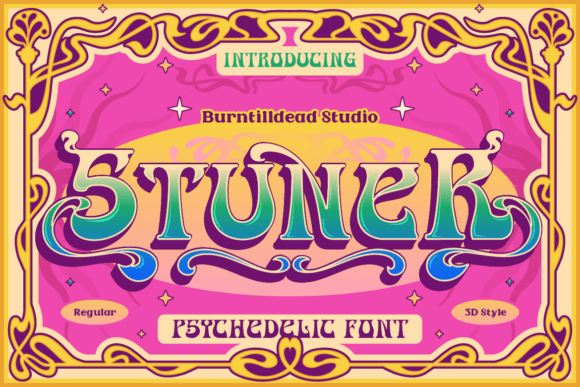
At its core, Stuner is a display font built for impact. Its letterforms are asymmetrical and irregular, giving each character a hand-drawn, vintage feel that’s impossible to replicate with a standard sans serif font or a clean serif font. The shapes feel organic and slightly rebellious, as if they were sketched on paper before being digitized. This inherent personality makes it a powerful tool for injecting life and authenticity into a project. It’s not just a typeface; it’s a mood.
Exploring the Two Styles: Regular and 3D
What makes Stuner particularly versatile is its two distinct styles. The Regular style offers that classic, flat psychedelic look. It’s perfect for applications where you want the texture and form of the letters to speak for themselves without added dimension. Think of it for subtle branding on merchandise, like a sleeve print on a t-shirt or a sticker design where the focus is on the quirky letter shapes and a strong color palette.
The 3D style is where things get truly trippy. This version adds a dimensional effect, making the letters appear to pop, float, or rise from the surface. The shadows and highlights are crafted to enhance the retro feel, creating an illusion that’s both playful and mesmerizing. This style is your go-to for high-impact visuals where you need an immediate “wow” factor. It’s ideal for event posters, hero images on a website, or album cover art that demands attention in a crowded digital marketplace.
Practical Applications: Where Stuner Truly Shines
Knowing a font looks cool is one thing; knowing where to use it is what separates a good designer from a great one. Stuner’s strength lies in projects where personality and memorability are paramount. Its visual weight and unique texture make it a poor choice for body text or lengthy paragraphs, but it excels as a headline font or for short, impactful phrases.
- Music and Entertainment: This is Stuner’s natural habitat. For indie band logos, festival lineup posters, or vinyl album covers, it provides instant genre credibility. The 3D style can make a movie title for a sci-fi or fantasy film feel like a vintage movie poster you’d find in a collector’s shop.
- Branding and Marketing: For brands targeting a niche, creative audience—think craft breweries, vintage clothing stores, or boutique coffee shops—Stuner can form the cornerstone of a brand identity. Use it for your logo, packaging headlines, or social media banner to establish a distinct, retro-modern vibe. It’s a creative font that helps small businesses stand out from corporate minimalism.
- Digital and Social Media: In the fast-paced world of social media graphics, a font like Stuner can be the difference between being ignored and being remembered. Use it for quote graphics, Instagram story headers, or YouTube thumbnail text. Its high legibility at larger sizes ensures your message gets across, even on a small phone screen.
- Personal and Editorial Projects: For bloggers, podcasters, or self-publishing authors in the creative space, Stuner can elevate editorial design. Use it for chapter titles in a book, the header for a zine, or the title card for a video series. It adds a layer of professionalism and intentional style that generic fonts can’t match.
Using Stuner Effectively: Pairing and Readability
The key to using a strong display font like Stuner is balance. Because it has such a pronounced personality, pairing it with a neutral, clean font is almost always the right move. A simple, geometric sans serif font for body text or supporting information creates a clear visual hierarchy. The Stuner headline grabs the eye, and the clean secondary font allows the reader to absorb the details without strain.
Always test readability in context. While the Regular style is highly legible at poster sizes, the 3D effect can sometimes reduce clarity if used at very small scales or over busy backgrounds. A practical design observation is to use the 3D style for large, short titles and the Regular style for slightly smaller subheadings or where texture is more important than dimension. This maintains the aesthetic while ensuring your audience can actually read the content.
Making the Choice: Is Stuner Right for Your Project?
Before integrating any new design asset, run a quick evaluation. Ask yourself: Does my project’s tone align with playful, retro, or psychedelic themes? Is my audience likely to respond to a vintage-inspired aesthetic? Will this font be used for short-form display text rather than long paragraphs? If you answered yes, Stuner is likely a strong candidate.
When you download a commercial font like Stuner, review the license. Most premium fonts come with clear licensing for desktop, web, and app use. Understanding this protects your project legally, especially for commercial work like client logo design, merchandise, or paid digital products. The investment in a licensed premium font also supports the type designer who created it, ensuring the continued availability of high-quality, unique fonts for the creative community.
Ultimately, Stuner is more than just a collection of letters. It’s a tool for storytelling. It can transport a viewer to a different era, evoke a specific emotion, and give a brand or project an unmistakable voice. By understanding its characteristics and applying it thoughtfully, you can turn a standard design into a trippy visual experience that resonates and engages. Let it be the spark that transforms your next creative endeavor.