Rusted Orlando: A Vintage Font Collection for Modern Projects
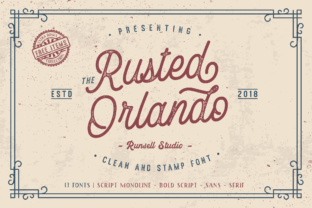
Finding a typeface that carries genuine character can feel like searching for a needle in a haystack. Many fonts labeled "vintage" often look generic or overly distressed. Rusted Orlando takes a different approach. This is a comprehensive collection built around a core monoline script, supported by a bold script, a clean sans serif, and a traditional serif font. The visual personality here leans into an authentic, weathered aesthetic without sacrificing clarity. It feels handcrafted and substantial, suitable for projects that need to establish a sense of history or artisanal quality immediately.
The appeal of Rusted Orlando lies in its versatility within a specific niche. It does not try to be everything to everyone. Instead, it offers a cohesive set of tools for designers working on branding for craft breweries, barbershops, vintage clothing lines, or boutique food packaging. The monoline script provides a steady, legible flow for headlines, while the bold script adds emphasis where needed. The accompanying sans and serif options allow for building full typographic systems, ensuring body text complements the display styles without clashing. This makes it a practical premium font choice for real-world applications.
Practical Applications Across Creative Fields
When evaluating a creative font like Rusted Orlando, the first question is usually about fit. Where does it actually work? The answer spans several common design scenarios. For logo design, the script styles offer a strong starting point for brands wanting a retro or hand-lettered feel. The built-in texture and weight give logos immediate presence, reducing the need for additional effects. In packaging design, particularly for artisanal goods, the entire family shines. You can use the serif font for ingredient lists and the sans serif font for clean callouts, maintaining a unified look.
Consider editorial design next. While a handwritten font might not be ideal for long-form reading, Rusted Orlando's styles work well for chapter titles, pull quotes, or magazine mastheads. The bold script can draw the eye to key sections in a layout. For digital use, such as web design headers or social media graphics, the high-impact nature of the display styles ensures text stands out against busy backgrounds. However, testing on screen is crucial. The distressed details, while adding charm, must remain legible at smaller pixel sizes.
Small business owners and entrepreneurs will find value in the included design assets. The set comes with illustrations, ornaments, and badges that are designed to pair with the typography. This is a significant time-saver. Instead of hunting for separate graphics that match the font's style, you have ready-made elements for creating cohesive marketing materials, from business cards to event posters. This integrated approach helps maintain brand identity consistency across different touchpoints, which is often a challenge for those without a dedicated design team.
Strategic Use for Branding and Communication
Choosing a typeface is a strategic decision that influences how an audience perceives a brand. Rusted Orlando conveys a specific set of associations: craftsmanship, tradition, durability, and personality. It is not the right choice for a cutting-edge tech startup or a minimalist luxury brand. Where it excels is in communicating warmth and authenticity. A café using this font in its menu and signage immediately sets a certain tone. The modern typography trend of mixing vintage styles with clean layouts is where a set like this provides the necessary tools.
Readability must always be a priority. The main script, while beautiful, should be used sparingly for headlines or short phrases. For longer text, switch to the accompanying sans serif font or serif font. This creates a clear visual hierarchy. The display font grabs attention, and the supporting text delivers the message comfortably. This principle applies whether you are designing a website, a brochure, or product labels. Good hierarchy guides the reader naturally through the content, improving engagement and comprehension.
For those considering this commercial font, reviewing the licensing is a necessary step. Most premium font licenses allow for broad use across print, digital, and merchandise, but it is always wise to confirm the specifics for your intended application. Test the font in context before finalizing any major project. Create mockups of your logo, a social media post, and a printed flyer. See how the styles interact. Does the font pairing feel balanced? Does the texture hold up when printed? This hands-on evaluation is the best way to determine if the typeface meets your practical needs and aesthetic goals.
Working With the Full Character Set
A common oversight with display font sets is failing to explore the full range of provided characters. Rusted Orlando includes alternates and ligatures that can significantly enhance your designs. Swapping out a standard "a" for an alternate version can change the entire flow of a script headline. Taking the time to access these OpenType features, if your software supports them, allows for more customized and professional-looking results. It turns standard text into something that feels uniquely tailored.
Pairing is another area where strategy matters. Because Rusted Orlando includes its own sans and serif companions, you have a built-in system. Using the bold script for a main headline, the monoline script for a subhead, and the sans serif for body copy creates a harmonious and functional layout. If you wish to pair it with an external font, look for something with a neutral, geometric quality. A clean, modern sans serif can provide a nice contrast to the vintage script, preventing the design from feeling too thematically heavy.
Ultimately, a font set like Rusted Orlando is a toolkit. Its value is realized through application. It offers a distinct visual language for projects that benefit from a nostalgic or handcrafted feel. By understanding its strengths—its cohesive family, its included assets, and its strong personality—you can make informed decisions about where and how to use it effectively. The goal is not to use the font because it is available, but because it solves a specific communication problem and elevates the work you are creating.