Moon Tarot: A Celestial Serif for Modern Mystics
There's a moment in every design project where the typography either whispers the right story or shouts the wrong one. When you're building a brand rooted in intuition, magic, or cosmic wonder, that whisper needs to carry weight. That's where Moon Tarot enters the conversation—not as just another decorative serif font, but as a genuine design asset that speaks the language of the stars.
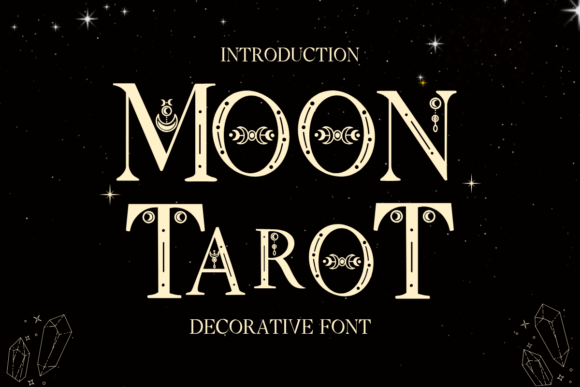
Every character in this typeface is a small celestial map. Look closely at the letterforms and you'll find integrated moon phase symbols, delicate cosmic orbits traced into the curves, and tiny starlight points that catch the eye without overwhelming the text. The sharp serifs and balanced anatomy channel the wisdom you'd find in vintage tarot decks, yet the overall feel remains contemporary and polished. It's a rare combination—ornamental without being impractical, mystical without veering into novelty territory.
Where Moon Tarot Finds Its Voice
Not every font earns its place in a brand identity toolkit. Some are too quirky for sustained use, others too generic to leave an impression. Moon Tarot occupies a sweet spot that makes it genuinely versatile for specific creative niches. If you're designing for a tarot or oracle deck brand, this typeface practically introduces itself. The celestial details aren't afterthoughts—they're woven into the DNA of each glyph, so your headers, card titles, and packaging all carry a cohesive mystical presence.
Think about mystical jewelry logos. You need something that feels precious and intentional, a font that suggests ancient knowledge without looking dated. Moon Tarot delivers that balance. Its sharp serifs give it a refined edge, while the embedded celestial motifs add depth that a standard serif font simply can't match. For astrology blog headers, it brings immediate visual authority—readers see it and already know what kind of content awaits them.
High-end spiritual packaging is another arena where this premium font truly shines. Whether you're wrapping incense bundles, labeling essential oil bottles, or designing a box set for meditation cards, the typeface elevates the product. It tells customers that someone cared about every detail, from the formula inside to the visual identity outside.
Practical Applications Beyond the Obvious
While the primary use cases are clear, experienced designers and creative entrepreneurs often find unexpected applications for a font with this much personality. Consider social media graphics for a wellness influencer—Moon Tarot on a quote overlay or carousel header can stop the scroll. Editorial design for a niche magazine about spirituality or herbalism benefits from its ability to anchor a visual hierarchy without needing elaborate illustration support.
Web design presents its own set of challenges, and this is where thoughtful font pairing becomes essential. Moon Tarot works beautifully as a display font for hero sections, landing page headlines, and call-to-action statements. Pair it with a clean sans serif font for body text, and you get contrast that's both readable and visually compelling. A simple script font or handwritten font can complement it for accent text, though you'll want to keep those uses restrained—too many decorative fonts competing for attention creates visual noise.
How This Typeface Shapes Brand Perception
Typography is one of the most powerful tools in logo design and brand identity work, yet it's often the most overlooked. The typeface you choose for a spiritual brand does more than display words—it sets emotional expectations. Moon Tarot communicates intuition, mystery, and a certain timeless elegance that resonates with audiences seeking meaning beyond the material.
Audience engagement often starts with recognition. When a brand consistently uses a distinctive creative font across packaging, web presence, and print materials, customers begin associating that visual language with the experience the brand provides. Moon Tarot's unique character details—those subtle moon phases and orbit lines—create visual anchors that stick in memory. This isn't about flashy design tricks; it's about building a cohesive visual identity that feels authentic to the brand's mission.
Professionalism matters too. A spiritual business that invests in quality design assets signals that it takes its craft seriously. There's a difference between a tarot reading service that uses a generic system font and one that presents itself with intentional, beautiful typography. Moon Tarot helps bridge that gap—it's a commercial font that carries the gravitas of a carefully curated typeface without requiring custom lettering.
Readability and Visual Hierarchy in Practice
Here's an honest observation: decorative fonts live and die by their readability. Moon Tarot's designers clearly understood this. The letterforms maintain clarity even at smaller sizes, which matters more than people realize. Your logo might appear on a business card, a website favicon, or a social media thumbnail—each context demands legibility.
For editorial design and packaging design, visual hierarchy is everything. Use Moon Tarot for headlines and key statements where its personality can breathe. Drop to a simpler companion font for longer passages. This approach keeps your layouts dynamic while ensuring readers can comfortably consume information. In web design, test the font at multiple breakpoints. What looks striking on a desktop hero section might need size adjustments on mobile to maintain its impact.
Choosing and Working With Moon Tarot
Before committing to any serif font for a project, evaluate fit honestly. Pull up the font specimen, type out actual content from your project—not just "The quick brown fox"—and see how it handles your real words. Does the personality match the brand voice? Do the letter combinations in your brand name look balanced? Moon Tarot handles most Latin character sets well, but always verify specific letter pairings.
Check what's included in the licensing package. A quality premium font typically offers multiple weights, stylistic alternates, and sometimes ligatures or additional glyph sets. These extras give you flexibility across different applications. If you're designing for commercial use—selling products, creating client work, or building a brand—confirm that the commercial font license covers your intended applications. Most reputable foundries make this straightforward, but it's worth verifying before you build an entire identity system around a typeface.
Font pairing is where many projects succeed or stumble. Start with contrast. Moon Tarot's decorative serif character pairs naturally with geometric sans serifs, clean grotesques, or even a restrained modern typography option. Avoid pairing it with other highly ornamental fonts unless you have a very specific artistic vision. Test combinations in context—mock up a business card, a website header, or a product label rather than just placing fonts side by side in a blank document.
Finally, consider your audience. Adults exploring tarot, astrology, and spiritual wellness respond to visual cues that feel both mystical and trustworthy. Moon Tarot speaks that visual language fluently. It doesn't try to be everything—it serves a specific creative niche with genuine craft, and that focus is exactly what makes it valuable for the designers, entrepreneurs, and creators who need it most.