Darby: A Folk Art Font Carved with Character
There’s a specific kind of warmth you feel when you encounter an object that clearly carries the mark of its maker. It’s the subtle imperfection in a handmade ceramic mug, the intricate stitch of a vintage quilt, or the deep grain of a carved wooden toy. In the digital world, this tactile, human quality is often lost. But occasionally, a typeface comes along that brings it rushing back. Darby is one such font—a premium display typeface that doesn't just represent letters; it tells a story with each one.
More Than Letters: A Gallery of Craft
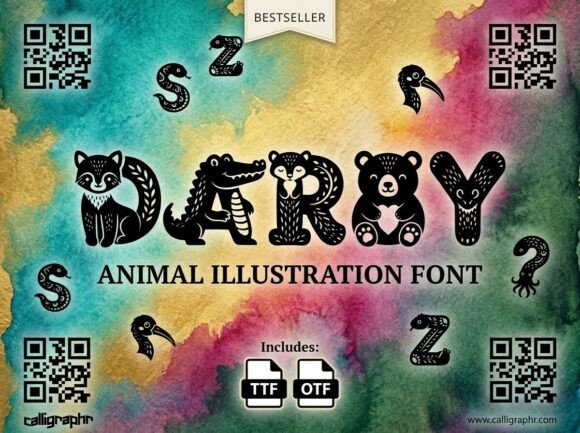
At first glance, Darby is bold and friendly. Its ultra-chunky, blocky forms give it a strong, approachable presence, perfect for grabbing attention. But look closer, and the real magic reveals itself. Every single letter in the Darby alphabet is a self-contained piece of folk art. The designers have taken the familiar shapes of traditional block letters and transformed them into canvases for meticulous, hand-carved detail.
Imagine the capital letter "A" where the negative space within the crossbar isn't empty, but filled with a perfectly symmetrical botanical leaf. Picture the "O" as a frame for a blooming floral rosette. The "S" might feature the gentle curve of a miniature animal totem, while scattered throughout the character set you'll find tiny paw prints, delicate starlight dots, and woodland creatures peeking out. This is the essence of Darby: it’s a collection of individual vignettes inspired by Scandinavian and Slavic craft design, defined by deep black contours and incredibly intricate cutouts.
This isn't a font that whispers; it speaks with the confident, charming voice of a storybook. Its personality is one of heritage, warmth, and meticulous craftsmanship. It evokes the feeling of a cozy cabin, a well-loved folk tale, and the quiet joy of creating something beautiful by hand. For designers and creators, this means Darby is more than a creative font—it’s a built-in design asset that injects instant narrative and texture into any project.
Where Darby Truly Shines: Practical Applications
Understanding a font’s character is one thing, but knowing where to deploy it is where the real value lies. Darby’s distinctive style makes it a specialist, not a generalist. It’s a display font meant for headlines, logos, and short bursts of impactful text where its artistry can be fully appreciated. Using it for long body copy would be a disservice to both the font and your reader.
Children’s Fairytale Book Titles: This is Darby’s natural habitat. Its friendly, chunky forms are instantly appealing to children, while the intricate details will captivate adults reading along. It sets the perfect tone for magical stories, classic fairy tales, and whimsical adventures before the first page is even turned.
Artisan & Cottagecore Branding: For small businesses selling handmade goods, organic foods, or homestead products, Darby is a brand identity powerhouse. It communicates authenticity, care, and a connection to tradition. Think logo design for a local bakery, a line of herbal teas, or a boutique candle maker. It’s the visual equivalent of a “handmade with love” tag.
Packaging & Labels: On the shelf, Darby helps products stand out. It’s exceptionally effective for packaging design in the gourmet food, cosmetic, and artisan craft sectors. The font’s luxurious, handmade feel suggests premium quality and careful curation, influencing a customer's perception of the product inside.
Seasonal & Holiday Projects: The folk art aesthetic has a strong connection to winter holidays, harvest festivals, and seasonal celebrations. Darby is perfect for creating cozy Christmas market posters, heartfelt holiday card designs, unique gift tags, and festive social media graphics that feel genuinely special.
Web Design & Social Media: While not for body text, Darby can be a stunning hero font for a website header or a standout title for a blog post about traditional crafts. On social media, a single word set in Darby can stop the scroll, making it invaluable for creating eye-catching Pinterest pins, Instagram story titles, and YouTube thumbnails.
Working with Darby: A Designer's Practical Guide
Integrating a character-rich font like Darby into your workflow requires a thoughtful approach. Here’s how to make the most of it.
Evaluate the Project Fit: First, consider the project's tone. Is it meant to feel modern, minimalist, or corporate? Darby is likely not the right choice. But if the brief calls for warmth, tradition, whimsy, or a storybook quality, it’s an excellent candidate. Always let the project's core message guide your font selection.
Master Font Pairing: Because Darby is so visually complex, it demands a simple partner. A clean, neutral sans serif font for body copy is often the safest and most effective pairing. Fonts like Lato, Open Sans, or Montserrat provide a calm, readable foundation that lets Darby’s details shine without creating visual chaos. You could also pair it with a simple, understated serif font for a more classic editorial feel in a book layout.
Prioritize Readability: Always test Darby at the intended size. Its intricate cutouts, while beautiful, can fill in or become muddy at very small point sizes or on low-resolution screens. It performs best as a large headline or title. For digital use, ensure there is sufficient contrast with the background. For print, consider the paper stock; a textured, matte paper can enhance its handmade character, while a high-gloss finish might clash.
Understand the Licensing: As a premium font, Darby will come with a commercial license. Before purchasing for a client project or a product you plan to sell, carefully review the license terms. Understand what’s permitted regarding usage in logos, on merchandise, in apps, and across multiple devices. This is a crucial step for any commercial font to ensure you’re using it legally and professionally.
In the end, Darby is a reminder of the power of modern typography to evoke emotion and tell a story. It’s not just another typeface; it’s a carefully crafted tool for designers, marketers, and creators who want to infuse their work with a sense of history, craftsmanship, and unmistakable charm. By using it thoughtfully and pairing it wisely, you can transform a simple headline into a memorable work of art.