Maya: The Dark Fantasy Font for Epic Storytelling
Sometimes a project needs more than just a font. It needs a voice, a texture, a piece of a world you can almost touch. That's the space where Maya lives. This isn't a typeface you choose for a corporate report or a minimalist web layout. You choose Maya when your story has roots, when your brand has a soul that feels ancient, and when your design needs to whisper of untamed magic and deep, whispering woods.
A Typeface Grown from Gnarled Vines and Ancient Wood
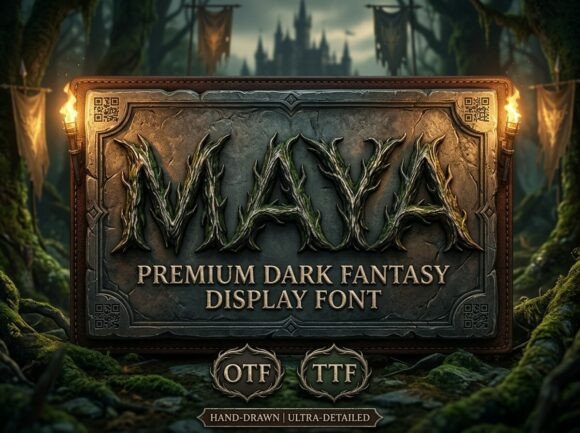
At its heart, Maya is a premium dark fantasy display font with a personality as rich as the folklore that inspires it. Each letterform is meticulously hand-drawn, crafted not from clean geometric lines, but from the organic chaos of gnarled, thorn-covered vines and the textured grain of mossy, ancient wood. The result is an "overgrown" silhouette that feels both wild and intentional. It's a serif font in spirit, with its sturdy, legible roots, but its execution is pure artistry, making it a standout piece in any collection of design assets.
The appeal of a typeface like this is its immediate narrative power. It doesn't just spell out a word; it conjures an atmosphere. Use Maya for a book title, and you're instantly signaling to the reader that the story within involves deep forests, forgotten magic, and a touch of the untamed. It’s a typeface that wears its "mystic-woodland" soul on its sleeve, making it an invaluable tool for projects that demand a strong, evocative brand identity.
Where This Creative Font Truly Shines
Understanding where Maya fits is key to using it effectively. Its high-detail, high-impact nature means it’s built for the spotlight, not for the body copy. Think of it as the hero element in your design, the piece that draws the eye and sets the entire tone.
- Publishing & Editorial Design: This is its natural habitat. Use it for the titles of high-fantasy, dark folklore, or epic adventure novels. It’s perfect for chapter headings, drop caps, and special edition covers where a tactile, handcrafted feel is paramount.
- Tabletop & Game Branding: Independent game designers will find Maya ideal for logos, box art, and rulebook headers. It immediately communicates genre, helping your game stand out on a crowded shelf or in a digital storefront.
- Cinematic & Event Marketing: For movie posters, especially in the dark fantasy or epic genre, this typeface adds a layer of gritty, authentic artistry. It’s equally powerful for event headers for themed conventions, concerts, or immersive experiences.
- Digital Presence & Social Media: In the realm of social media graphics, a bold, unique font is your best ally for stopping the scroll. Use Maya for high-impact headers on Instagram, YouTube thumbnails, or website banners for blogs and brands centered around fantasy, gaming, or dark academia aesthetics.
- Packaging & Merchandise: For small businesses selling artisanal products, fantasy-themed merchandise, or RPG accessories, Maya can elevate packaging design, making a product feel more bespoke and story-driven.
Practical Guidance for Choosing and Pairing
Choosing a display font like Maya is a strategic decision. It’s about evaluating fit, not just falling for an aesthetic. Ask yourself: does the core personality of my project—its brand perception and target audience—align with a dark, organic, and fantastical vibe? If the answer is yes, you’ve likely found a match.
Testing for Readability and Hierarchy
As a display font, Maya’s primary job is to be seen and to establish visual hierarchy, not to be read in long paragraphs. Always test its readability at the specific size you intend to use it. The intricate details that make it beautiful at a large scale can become muddy if reduced too much. For a balanced design, pair it with a clean, highly legible sans serif font or a simple serif font for body text, subheadings, and supporting information. This contrast allows Maya to command attention without overwhelming the entire layout.
Evaluating the Complete Package
A quality premium font often comes with more than just the basic uppercase and lowercase letters. Review the font file to see what’s included. Look for stylistic alternates, ligatures, and special characters. These extras are not just fluff; they are practical tools that give you more creative control. Alternates can help you avoid repetitive letter shapes in a headline, and ligatures can create more natural, flowing connections, enhancing the handcrafted feel of the typeface.
Licensing for Commercial Projects
For designers, entrepreneurs, and small business owners, licensing is a critical, non-negotiable step. Ensure the license for Maya covers your intended use, whether it’s for a client’s logo, a product for sale, or a digital download. A clear commercial license protects you and respects the work of the type designer, which is a cornerstone of professional practice in modern typography.
Ultimately, incorporating a typeface like Maya