Kensington Parlor: A Typeface of Timeless Authority
There's a specific feeling you get when you walk into a well-established tavern or an old-world library. It’s a sense of history, of stories held within the walls, of craftsmanship that has stood the test of time. Translating that feeling into a digital or print design is a challenge many creators face. You need a typeface that does more than just display letters; it needs to project a personality, to tell a story before a word is even read. This is the precise challenge that the Kensington Parlor display font was designed to meet.
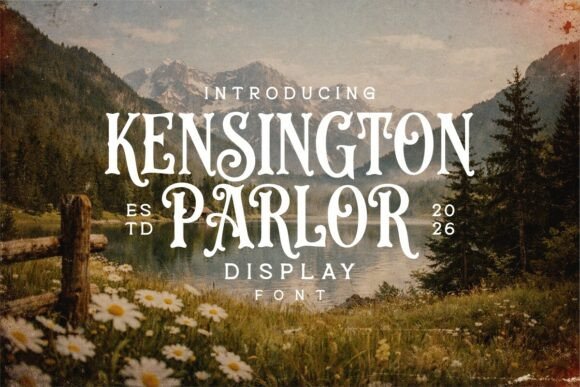
At its core, Kensington Parlor is a premium serif font that marries the ornate detail of the Victorian era with a sturdy, adventurous spirit. Its anatomy is upright and confident, built on classic serif structures that ensure a foundation of readability and professionalism. What sets it apart are the high-energy artistic flourishes—the subtle swashes on certain letters, the elegant terminals, and the carefully weighted strokes. These details are not merely decorative; they are functional, giving the typeface its distinctive voice. It feels both legendary and artisanal, as if each character were crafted by a skilled typographer rather than simply generated. This unique blend makes it a powerful creative font for projects that demand attention and convey a sense of heritage.
Where Vintage Charm Meets Modern Application
The true value of a typeface like Kensington Parlor lies in its versatility across real-world projects. Its personality is perfectly suited for applications where brand perception is built on authenticity, quality, and a touch of nostalgia. Consider its use in packaging design for artisanal goods. A coffee roaster, a craft distillery, or a gourmet jam producer could use Kensington Parlor on their labels to instantly communicate a story of small-batch care and traditional methods. The font’s sturdy presence ensures the product name is clear and authoritative, while its flourishes add the necessary charm.
For logo design, this typeface excels in creating memorable wordmarks for businesses like cozy taverns, heritage-focused bakeries, boutique hotels, or even independent bookshops. It provides an immediate sense of establishment and trustworthiness. In the realm of editorial design, think of vintage travel posters, book covers for historical fiction, or magazine headers for publications focused on craftsmanship, exploration, or classic style. Kensington Parlor sets a scene, transporting the audience before they engage with the body copy. Its strength as a display font means it’s best used for headlines, subheadings, and impactful pull quotes rather than long blocks of body text.
Building a Cohesive Visual Identity
Integrating a distinctive font like Kensington Parlor into your brand identity requires thoughtful execution. Its primary influence is on visual hierarchy and brand recognition. Used consistently for key headings and logos, it becomes a recognizable element of your brand’s visual language. This consistency builds professionalism and makes your materials instantly identifiable across different platforms, from a website’s hero section to social media graphics and printed brochures.
A critical consideration is font pairing. Because Kensington Parlor has a strong personality, it needs a companion typeface that complements rather than competes. A clean, neutral sans serif font for body text is often an ideal match. The contrast allows the display font to shine while ensuring the main content remains highly readable. For projects aiming for a more curated, layered look, pairing it with a simple script font or a handwritten font for accent text can work, but this requires careful testing to avoid visual clutter. Always test your pairings in context—see how they look on a mockup of your website, a sample business card, or a draft of your packaging.
A Practical Guide to Choosing and Using Kensington Parlor
Before committing to any commercial font, a practical evaluation is essential. Start by defining your project's core message. Does your brand or publication embody the same timeless, authoritative, and artisanal qualities that Kensington Parlor projects? If your aesthetic is ultra-modern, minimalist, or playful, this font may not be the right fit. Its strength is in conveying heritage and solidity.
When you download a premium font like this, review the full character set. Look for stylistic alternates, ligatures, and additional weights or styles. These design assets provide flexibility, allowing you to customize the look for different applications—perhaps using a more ornate alternate for a logo and a simpler version for website headings. Test for readability at various sizes. While it’s crafted for clarity, always check how it renders on different screens and in print, especially for smaller subheadings.
Finally, understand the licensing. A quality creative font comes with clear commercial licensing that outlines its permitted uses, such as for digital products, print materials, merchandise, and client work. Ensuring you have the correct license protects your project and respects the work of the type designer.
In a design landscape crowded with fleeting trends, choosing a typeface with substance and story is a strategic decision. Kensington Parlor offers more than just letters; it offers a narrative tool. It’s for the designer who wants to build a brand with depth, the publisher crafting an immersive reading experience, or the entrepreneur whose product tells a story of quality. It’s a piece of modern typography that doesn’t chase the new, but rather reinterprets the enduring, giving every word it forms a sense of permanent, authoritative style.