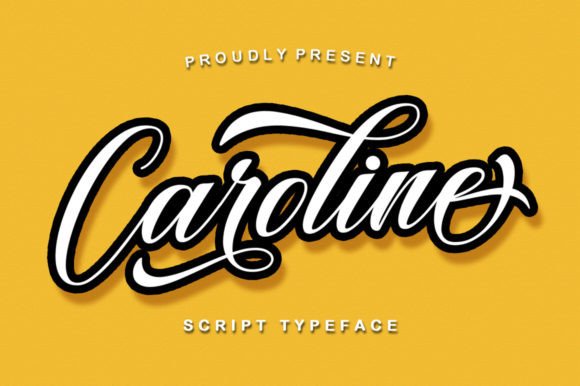
Caroline: A Retro Font That Brings Vintage Charm to Modern Design
If you've ever found yourself scrolling through endless font libraries looking for something with real personality, something that doesn't just sit quietly on the page but actually makes a statement, you might want to take a closer look at Caroline. This isn't another generic typeface trying to be everything to everyone. Caroline is a retro display font that draws its inspiration from the bold, expressive typography of the 1960s, 70s, and 80s, and it carries that heritage with genuine confidence.
What immediately catches your eye with Caroline is its shape. Every corner has been intentionally softened and rounded, giving the entire character set a warm, approachable quality that feels distinctly vintage without looking dated. It's the kind of font where you can see the designer's hand in every curve. The letterforms have a tactile quality, almost like they were shaped from clay or carved from wood before being digitized. That rounded geometry isn't just decorative either. It creates a visual rhythm that makes text set in Caroline feel cohesive and inviting, even at larger display sizes where every detail becomes magnified.
Understanding Caroline's Visual Personality
Every typeface communicates something beyond the words it spells out. Caroline communicates nostalgia, creativity, and a certain playful sophistication. It sits in that sweet spot between retro and contemporary, which means it can anchor a vintage-inspired brand identity without making the design feel like a period piece. The softer edges give it a friendlier demeanor than many sharp-edged retro fonts, making it versatile enough for projects that want to evoke warmth rather than just throwback aesthetics.
As a premium font, Caroline is designed as a display font, which means it shines brightest at larger sizes. Think headlines, logos, posters, and hero text rather than body copy. That's an important distinction to understand early on. You wouldn't set a 500-word article in a display typeface any more than you'd use a script font for a spreadsheet. Knowing where a font belongs in your typographic hierarchy is half the battle in good design, and Caroline tells you exactly where it wants to be: front and center, commanding attention.
Where Caroline Truly Shines
Let's talk practical applications, because a font is only as valuable as the projects it elevates. Caroline works exceptionally well in logo design for brands that want to communicate authenticity, craftsmanship, or a connection to a simpler era. Picture a boutique coffee roaster, an independent record label, a craft brewery, or a handmade soap company. These are brands where vintage typography doesn't just look good, it reinforces the story being told. Caroline's rounded letterforms suggest care and intentionality, which aligns perfectly with businesses built on those values.
In packaging design, Caroline has serious potential. Shelf appeal matters enormously, and a distinctive typeface can be the difference between a product that gets picked up and one that blends into the background. The font's retro character gives packaging an instant sense of provenance, as if the product has a history worth discovering. Whether it's a label on a jam jar, a box for artisan chocolates, or a sleeve for organic tea, Caroline adds that layer of visual storytelling that connects with consumers on an emotional level.
For editorial design and publishing, think about chapter titles, pull quotes, magazine covers, and section headers. Caroline injects personality into layouts that might otherwise feel flat. If you're a blogger or content creator designing featured images, Pinterest pins, or newsletter headers, this font gives your graphics a distinctive look that stands apart from the sea of overused sans serif font choices dominating most feeds. Social media is a visual battlefield, and typography is one of your strongest weapons for recognition.
Web design applications deserve careful consideration here. While Caroline isn't suited for paragraph text, it can transform a website's hero section, navigation labels, or call-to-action buttons. Used strategically, it creates visual anchors that guide visitors through your content and establish a mood before they've read a single sentence. Pair it thoughtfully with a clean sans serif font for body text, and you've got a typographic system that balances personality with readability.
Practical Guidance for Working with Caroline
Before committing to any creative font for a project, test it in context. Set your actual headlines, not just sample text. Check how it looks at the specific sizes you'll be using. Print a proof if the project involves physical materials. Digital screens and printed paper render typefaces very differently, and what looks sharp on your monitor might lose definition on uncoated card stock.
Font pairing is another critical step. Caroline has enough personality that it doesn't need a partner competing for attention. A straightforward geometric or humanist sans serif font typically works well for supporting text. You might also consider a simple serif font for longer-form content if the brand leans more traditional. Avoid pairing Caroline with other expressive typefaces like decorative handwritten font styles or ornate script font options. Two strong voices in the same composition will fight each other, and the result is visual noise rather than visual harmony.
Pay attention to what's included with the font package. Quality commercial font releases often come with multiple weights, stylistic alternates, ligatures, and extended language support. These extras aren't just bonuses. They expand what you can do with the typeface and give you more flexibility across different projects. Review the full character map before purchasing so you know exactly what tools you're working with.
Licensing matters more than most people realize. If you're using Caroline for a client project, a product you're selling, or a business venture, make sure your license covers commercial use. Many designers have learned this lesson the hard way. A font that seems affordable for personal use might carry different terms for commercial applications. Read the license agreement, understand the scope, and keep your documentation organized. It's tedious but necessary, and it protects both you and your clients.
Making the Most of This Distinctive Typeface
The best design assets are the ones that solve real problems, and Caroline solves a specific one: how do you make something look genuinely retro without feeling gimmicky? The answer lies in those carefully crafted rounded forms and the balance between nostalgia and modern execution. This is a font built by someone who understands that retro design isn't about copying the past. It's about channeling its energy through a contemporary lens.
For entrepreneurs and small business owners developing their brand identity, Caroline offers a shortcut to visual distinctiveness. In a marketplace crowded with minimal, geometric branding, a touch of vintage character can be genuinely refreshing. The key is restraint. Use Caroline where it has maximum impact. A logo, a headline, a product name. Then support it with simpler typographic choices that give the eye places to rest.
As with any design asset, the font itself is only part of the equation. Your color palette, imagery, layout choices, and overall creative direction all work together to create a cohesive experience. Caroline provides a strong starting point, a visual voice that carries weight and warmth. What you build around it is where your own creativity and strategic thinking come into play. Give it the right context, and this retro typeface will do exactly what great typography should do: make people stop, look, and feel something.